



Build vs. Buy RevOps Software: Costs, Risks & Benefits
Should you build or buy RevOps software? Explore maintenance costs, engineering risks, and why a hybrid approach may offer the best solution.
 Amy Cook·7 min read
Everybody Wants a Custom Build. Nobody Wants the Maintenance.
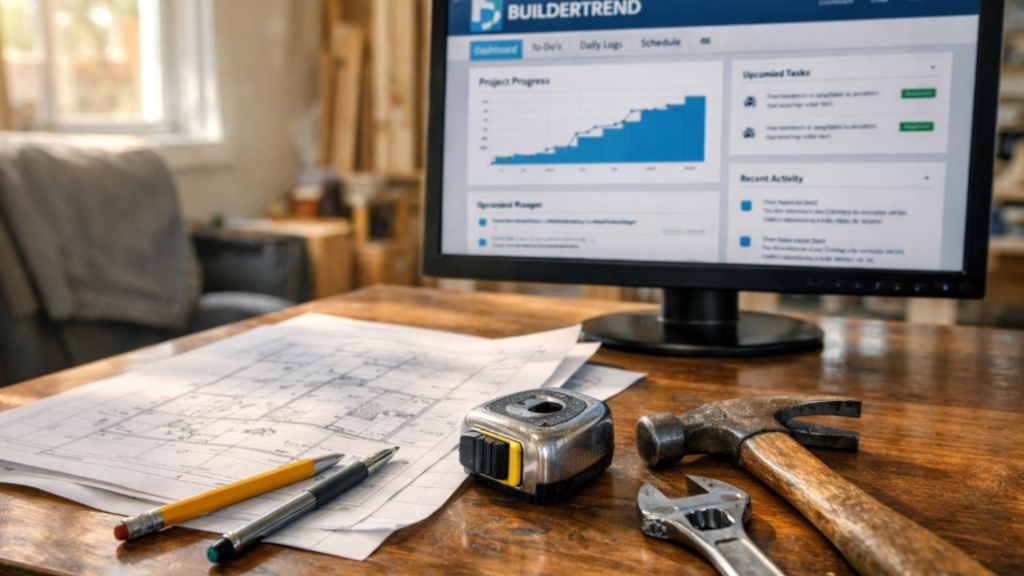
There’s something irresistible about building your dream home. You get to choose everything. The floor plan. The countertops. The enormous kitchen island nobody technically needs but everybody wants. No compromises. No awkward layouts. No wondering why the previous owner thought putting the laundry room upstairs was a personality trait. Just a beautiful home designed around the way you live.
That’s also the appeal of building your own revenue operations software. Why settle for someone else’s platform when your engineers could create exactly what your company needs? And now that AI can help write code, generate workflows, and accelerate development, the possibilities seem almost limitless. The prototype looks fantastic. The executives love it. Someone inevitably asks, “Why are we paying for software when we can build this ourselves?”
A perfectly reasonable question. Until you remember that somebody has to maintain the house.
_______________
Is It Better to Build or Buy RevOps Software?
Building RevOps software makes sense when custom functionality provides a meaningful competitive advantage. Buying makes sense when specialized, reliable infrastructure already exists and maintaining it internally would consume valuable resources.
For many companies, the best answer is a combination of both.
Custom software offers control over workflows, integrations, and user experiences. Purpose-built platforms provide established functionality without requiring organizations to develop and maintain every underlying component.
The decision depends on three questions:
- Does this functionality make our business meaningfully different?
- Do we have the engineering resources to support it long-term?
- What happens if the system makes a mistake?
Those questions matter far more than how quickly a developer can produce a working demo.
Why Is Building Custom RevOps Software More Appealing With AI?
AI-assisted development can reduce the time and effort required to create software prototypes, making custom RevOps applications more accessible to internal engineering teams.
Consider a RevOps team frustrated with its lead routing process. Instead of purchasing another application, an engineer creates a workflow that assigns inbound leads based on territory, account ownership, and a handful of business rules.
Within days, there’s something to demonstrate.
The workflow runs. The dashboard looks polished. Leadership sees the potential. But a prototype answers only one question: Can we build it?
It doesn’t answer the more important one: Should we own it? That distinction becomes critical when the application moves from a controlled demonstration into a production environment.
What’s the Difference Between a RevOps Prototype and Production Software?
A prototype demonstrates that software can perform a task. Production software must perform that task reliably as users, data, integrations, security requirements, and business conditions change.
That’s where the dream-home analogy becomes painfully accurate. During construction, everything looks manageable on the blueprints. Then you move in. The dishwasher leaks. The furnace needs servicing. The basement develops a mysterious smell. And the beautiful house you designed becomes a collection of things you now have to maintain.
Custom RevOps software follows a similar pattern.
Your routing workflow works perfectly until Sales reorganizes territories. Your compensation calculator handles the original plan until Finance introduces accelerators, splits, and exceptions. Your AI agent makes excellent recommendations until someone gives it permission to execute changes across multiple systems.
None of these developments necessarily mean the software was poorly built. They simply mean the business changed. And now the software has to change with it.
Why Is Custom RevOps Software Difficult to Maintain?
Revenue operations software becomes difficult to maintain because it must accommodate changing business rules, CRM configurations, integrations, permissions, and financial calculations.
Take territory management.
Assigning an account to a sales representative sounds straightforward. But what happens when an account belongs to a parent company? When two territories overlap? When a salesperson leaves? When the company reorganizes halfway through the fiscal year?
What started as a convenient internal application can become an important piece of business infrastructure. And infrastructure comes with responsibilities. Those responsibilities don’t disappear because the application was built internally.
Neither do the costs.
What Happens When the Developer Who Built Your RevOps System Leaves?
When custom software depends heavily on its original developers, employee turnover can create knowledge gaps, maintenance delays, and operational risk.
Who maintains this thing when the person who built it gets another job? Suddenly, the company owns an important piece of software that fewer people understand.
It’s the technological equivalent of buying a beautiful house and discovering that the previous owner installed all the wiring himself. Before you build your dream RevOps system, be sure you have the expertise and documentation necessary to keep the lights on.
What Are the Hidden Costs of Building RevOps Software In-House?
The total cost of custom RevOps software includes development, infrastructure, security, integrations, maintenance, and the opportunity cost of engineering resources.
Imagine your engineers spending several days troubleshooting a territory assignment problem. That’s several days they aren’t developing a proprietary AI assistant, improving the customer experience, or creating a feature that gives the company a competitive advantage.
The internal application may still be cheaper on paper than a software subscription. But what did the company give up to maintain it?
A complete build-versus-buy analysis should consider:
| Cost category | Questions to ask |
| Development | How many engineering hours will the initial build require? |
| Infrastructure | What will hosting, monitoring, and integrations cost? |
| Security | Who manages permissions, testing, and vulnerabilities? |
| Maintenance | Who handles updates, bugs, and changing business rules? |
| Opportunity cost | What other projects will engineers postpone? |
The cheapest option to build isn’t necessarily the cheapest option to own.
When Should Companies Build Custom RevOps Tools Instead of Buying?
Companies should consider building when the functionality is strategically distinctive, cannot be adequately supported by existing products, and can be maintained with available engineering resources.
Consider two projects.
The first is a custom AI sales assistant designed around your company’s unique methodology, customer engagement strategy, and internal processes. That could be worth building.
The second is a territory assignment engine responsible for maintaining account ownership rules across a changing sales organization.
That requires specialized business logic, reliability, and ongoing maintenance.
Does your company gain a competitive advantage by building both? Not necessarily. The strongest case for custom development is often the functionality customers or competitors cannot easily replicate.
How Does Fullcast Support a Hybrid Build-vs.-Buy Strategy?
Fullcast provides specialized revenue operations engines that organizations can connect to custom AI agents and applications through MCP and APIs, allowing teams to build differentiated workflows without recreating every underlying revenue function.
Fullcast’s approach includes five core areas:
- Territory management: Organizing account ownership and sales coverage.
- Routing: Directing leads and accounts according to business rules.
- Targets: Supporting quota and capacity planning.
- Compensation: Managing sales commission processes.
- Revenue intelligence: Providing visibility into pipeline and revenue performance.
Organizations can use these capabilities as a foundation for their own applications and AI-powered workflows. That creates a third option between building everything and buying everything.
Build what makes your business unique. Buy what needs to be accurate.
What’s the Smartest Way to Approach a RevOps Build-vs.-Buy Decision?
Start by identifying which capabilities differentiate your business, then evaluate the long-term cost, operational risk, and maintenance requirements of building the remaining infrastructure.
There’s nothing wrong with wanting a custom-built RevOps system. Companies have unique processes, customers, and competitive priorities. Sometimes, custom development is exactly the right investment.
But a beautiful prototype isn’t a long-term operating plan. Before committing to an internal build, ask who will maintain it, how it will adapt to business changes, and whether your engineers should spend the next several years supporting it. Because the real test of a dream home isn’t how beautiful it looks on move-in day. It’s whether you still love living there five years later.
Ready to Find Your RevOps Dream Home?
Should you build your own revenue infrastructure, buy a purpose-built platform, or combine the two?
Dream big. Just don’t forget the maintenance budget.